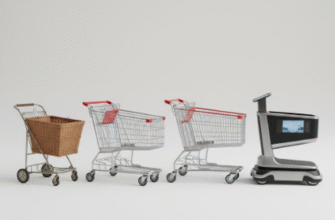
The journey of our food, from the soil where it grows to the plates where we eat it, is a story far more complex and dynamic than many realize. What we now call the food supply chain – this intricate network of producers, processors, distributors, and retailers – hasn’t always existed in its current, often globally sprawling form. Its evolution mirrors the broader sweep of human history, shaped by innovation, population growth, urbanization, and our ever-changing relationship with the land and technology.
The Dawn of Agriculture: Hyper-Local Sustenance
For the vast majority of human history, the concept of a ‘supply chain’ was almost non-existent in the way we understand it today. Following the Neolithic Revolution, when humans transitioned from nomadic hunter-gatherer lifestyles to settled agriculture around 10,000 BCE, food systems were intensely localized. Communities grew what they needed, perhaps trading small surpluses with neighbouring settlements. The ‘farm’ and the ‘table’ were often within walking distance, sometimes even part of the same household complex.
Life revolved around agricultural cycles. Availability was dictated strictly by seasons and local growing conditions. Preservation techniques were rudimentary – drying, smoking, and perhaps limited fermentation – primarily aimed at surviving lean periods, not facilitating long-distance trade of staples. The farmer was typically the consumer, or knew them directly. Trust was inherent, built on personal relationships within small communities. Waste was minimal, often reintegrated back into the farm ecosystem. This era was defined by subsistence and immediate consumption.
Cities Rise, Trade Routes Emerge
The growth of ancient cities – Mesopotamia, Egypt, the Indus Valley, China – marked the first significant shift. Urban populations, disconnected from direct food production, required sustenance from surrounding rural areas. This necessitated the development of early logistical systems. We see the emergence of organized grain storage (like the granaries of ancient Egypt), rudimentary transport via rivers and animal-drawn carts, and marketplaces where producers could sell their surplus.
While staple foods like grains and legumes formed the bulk of this early trade, long-distance routes like the Silk Road or the Spice Routes primarily dealt in high-value, low-volume, non-perishable goods – spices, silks, precious metals. These routes, while historically significant, didn’t fundamentally change the *daily* food supply for the average person in most regions for centuries. Their food remained largely local. However, the organizational principles and the very idea of moving goods over distances laid crucial groundwork. Techniques like salting fish or meat allowed for somewhat longer preservation and transport, expanding the reach slightly.
The Stirrings of Change: Agricultural Revolution
The period roughly spanning the 17th to 19th centuries witnessed profound changes in farming itself, particularly in Britain and spreading thereafter. Innovations like the seed drill, improved crop rotation systems (like the Norfolk four-course system), selective breeding of livestock, and land enclosure dramatically increased agricultural efficiency and output. For the first time, significant and consistent surpluses became the norm rather than the exception in developing regions.
This surplus needed to go somewhere. Growing towns and cities, increasingly populated by workers not engaged in agriculture, demanded reliable food supplies. This spurred investment in infrastructure. Canal networks were dug, and road systems improved, allowing bulk goods like grain and potatoes to be moved more effectively than ever before, though still relatively slowly by modern standards. This era saw the beginnings of regional specialization, where areas with favourable conditions focused on specific crops, knowing they could trade for other necessities.
Steam Power and Steel Rails: The Industrial Revolution’s Impact
The Industrial Revolution fundamentally reshaped the food supply chain. The invention and proliferation of the steam engine were pivotal. Steam-powered trains could cross vast land distances relatively quickly, carrying large quantities of agricultural produce. Steamships did the same for waterways and oceans. Suddenly, the potential reach of food production expanded exponentially.
This era also saw the dawn of artificial refrigeration. Initially reliant on harvested ice transported long distances (a significant industry in itself), the development of mechanical refrigeration systems in the latter half of the 19th century was revolutionary. It allowed perishable goods – particularly meat – to be transported across continents and oceans. The first refrigerated ships (reefers) carried frozen meat from Argentina and Australia to Europe, drastically changing diets and markets.
Canning technology, refined during the Napoleonic Wars for preserving food for armies, became commercially viable. This allowed fruits, vegetables, and meats to be shelf-stable for extended periods, decoupling consumption from seasonality and locality in a new way. Large-scale food processing companies began to emerge, transforming raw agricultural goods into branded, packaged products for a growing consumer market.
Verified Impact: The introduction of mechanical refrigeration and steam-powered transport in the 19th century truly globalized aspects of the food trade for the first time. These technologies allowed perishable items like meat and dairy to travel unprecedented distances without spoilage. This fundamentally altered agricultural economies and consumer diets in industrialized nations, making previously seasonal or geographically restricted foods more widely available.
The 20th Century: Acceleration and Complexity
The 20th century saw the intensification of all these trends. Mechanization on the farm exploded with the widespread adoption of tractors, combine harvesters, and other machinery, leading to massive increases in productivity and a corresponding decrease in the agricultural workforce. Chemical fertilizers and pesticides further boosted yields, though also raising environmental concerns later.
The rise of the supermarket after World War II created a new retail landscape. Supermarkets demanded consistent, large-volume supplies of a wide variety of goods, further driving the industrialization and consolidation of food production and processing. Logistics became a science in itself. The development of extensive highway systems and the dominance of trucking provided flexible, point-to-point distribution. Containerization, standardized shipping containers easily transferable between ships, trains, and trucks, streamlined global trade immensely from the 1960s onwards.
Perhaps the most critical development for perishables was the refinement and widespread implementation of the cold chain – an uninterrupted series of refrigerated production, storage, and distribution activities, maintaining a desired low-temperature range. This ensured the quality and safety of sensitive products like dairy, fresh produce, and frozen foods from farm to retailer, enabling the vast array of choices we see today.
Globalization Takes Hold
This infrastructure facilitated true globalization. It became common for produce to be grown on one continent, processed on another, and consumed on a third. Specialization intensified: certain countries or regions became dominant global suppliers of specific commodities like coffee, bananas, or soybeans. While this offered consumers unprecedented variety and year-round availability, it also created longer, more complex, and sometimes more vulnerable supply chains.
The Digital Age: Optimization and Awareness
The late 20th and early 21st centuries brought digital technology into the mix. Computers, barcodes, satellite communication, GPS, and later Radio Frequency Identification (RFID) tags revolutionized logistics management. Supply chains could be tracked and managed with incredible precision, optimizing routes, minimizing storage time (Just-In-Time delivery), and reducing costs.
Sophisticated software now manages inventory, forecasts demand, and optimizes distribution networks for maximum efficiency. Massive, highly automated distribution centers act as crucial hubs in this system. This relentless focus on efficiency delivered lower prices and greater choice for many consumers.
However, this era also saw growing awareness of the downsides. The concept of ‘food miles’ – the distance food travels – entered public consciousness, alongside concerns about the environmental footprint of global food systems, food waste (often occurring *within* the complex chain), labor practices, and the resilience of these long chains to disruption (as highlighted by events like the COVID-19 pandemic).
This has fueled counter-trends: a resurgence of interest in local food systems, farmers’ markets, Community Supported Agriculture (CSA) schemes, and farm-to-table restaurants, all seeking to shorten the chain and reconnect consumers with producers. Technology is also enabling this, with online platforms facilitating direct sales.
Challenges and the Road Ahead
Today’s food supply chains are marvels of logistics and technology, feeding billions. Yet, they face significant challenges. Ensuring resilience against climate change impacts, geopolitical instability, and pandemics is crucial. Reducing the staggering amount of food waste generated globally requires systemic changes. Ethical sourcing, fair labor practices, and environmental sustainability are increasingly important considerations for both businesses and consumers.
The future likely holds further evolution. Innovations like vertical farming and controlled environment agriculture could localize production of some crops even in urban areas. Lab-grown meat might disrupt traditional livestock industries. Blockchain technology offers potential for enhanced traceability and transparency. Artificial intelligence is poised to further optimize logistics and potentially reduce waste. The journey from the nearby farm to the distant table continues, driven by our constant quest for sustenance, efficiency, and, increasingly, sustainability.
“`