That little plastic fob dangling from your keys feels almost magical, doesn’t it? A simple press of a button, and *click*, your car doors lock or unlock from across the parking lot. No more fumbling with keys in the rain or trying to find the keyhole in the dark. But how does this everyday convenience actually work? It’s not magic, but rather a clever application of radio technology and security measures designed to make your life easier while keeping your vehicle secure.
At its heart, the system relies on communication between two main components: the key fob itself, which acts as a transmitter, and a receiver unit hidden within your car. Think of it like a tiny, specialized walkie-talkie system, but one where the conversation is mostly one-way and heavily encrypted.
Inside Your Key Fob: The Transmitter
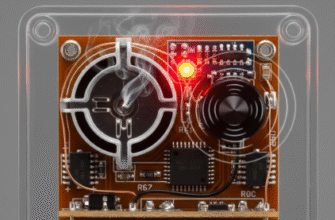
Let’s pop open (figuratively, please don’t actually break your fob!) that remote key. Inside, you wouldn’t find complex gears or levers. Instead, you’d see a small circuit board packed with electronics. The key players here are:
- A battery: Usually a small, coin-shaped lithium battery, providing the power needed to send signals. This is often the culprit when your remote stops working reliably.
- A microchip (Integrated Circuit): This is the brain of the operation. It stores a unique identifier for your specific fob and, crucially, the complex algorithm for generating security codes.
- An antenna: A small coil or trace on the circuit board designed to broadcast the radio signal generated by the chip.
- Buttons: These physical buttons, when pressed, complete a circuit, telling the microchip which command to send (lock, unlock, trunk release, panic alarm).
When you press a button, say ‘unlock’, you trigger the microchip. It wakes up, generates a specific digital code based on its internal programming, and sends this code via radio waves through the antenna. This isn’t just a simple “unlock” signal, though. That would be far too easy for thieves to intercept and replicate.
Inside Your Car: The Receiver
Somewhere within your car’s body, typically integrated into the Body Control Module (BCM) or a dedicated receiver module, lies the other half of this communication duo. This unit contains:
- An antenna: Tuned to listen for signals on the specific frequency your key fob uses.
- A receiver circuit: This captures the radio waves sent by your fob.
- A microprocessor: This chip is programmed to understand the signals from *your* specific key fob(s). It constantly listens for a valid signal.
- Connections: It’s wired into the car’s central locking system (actuators in the doors), the trunk release mechanism, the horn, and lights (for confirmation flashes/beeps).
This receiver is always passively listening, waiting for a familiar digital voice – the signal from a paired key fob.
The Digital Handshake: Sending and Receiving
So, you press the unlock button. The fob generates a coded message and transmits it. The car’s receiver picks up this signal. Now comes the critical part: verification. The car’s microprocessor analyzes the received code. Does it match the expected format? Is it from a fob that has been programmed or ‘paired’ with this specific vehicle? Most importantly, is it the correct, expected security code for this exact moment?
If the code passes all these checks, the receiver sends a command to the appropriate system. In the case of the unlock button, it signals the door lock actuators to disengage, unlocking the doors. Often, it will also flash the parking lights or interior lights as visual confirmation that the command was received and executed. If the code is incorrect, unrecognized, or deemed invalid (perhaps an old code that’s already been used), the receiver simply ignores it. Nothing happens. This prevents unauthorized access.
The Secret Sauce: Rolling Codes
Early remote entry systems used a fixed code. Every time you pressed ‘unlock’, the fob sent the exact same digital signal. While convenient, this was a security nightmare. Thieves could use a device called a ‘code grabber’ to record the signal transmitted when you locked or unlocked your car. They could then simply replay this captured signal later to unlock your car at their leisure. Not good.
To combat this, modern systems use a technology called Rolling Codes (also known sometimes as Hopping Codes). This is where the real cleverness lies. Instead of a fixed code, the microchips in both the key fob and the car’s receiver share a complex synchronization algorithm and a secret, factory-set starting point.
Here’s a simplified idea of how it works:
- When you press a button, the fob generates the *next* code in a long, pseudo-random sequence determined by the algorithm. It transmits this code.
- The car’s receiver, which knows the same algorithm and the last accepted code, calculates what the *next* code(s) in the sequence should be.
- If the received code matches one of the expected next codes, the car performs the action (lock/unlock) and remembers this new code as the ‘last accepted code’. Both the fob and the car have now ‘rolled’ forward in the sequence.
- The previously used code is now invalid and will be ignored if received again. This completely foils simple code grabber replay attacks, because the recorded code is useless moments after it’s used.
The sequence of possible codes is incredibly vast (often billions or trillions of combinations), making it computationally infeasible to guess the next code. The car’s receiver usually accepts a small window of upcoming codes, not just the very next one. This accounts for situations where you might accidentally press the button while out of range – the fob advances its code, but the car doesn’t receive it. When you’re back in range and press the button again, the fob sends a code slightly further down the sequence, but still within the car’s acceptable window. The car accepts it, performs the action, and re-synchronizes to this new point in the sequence.
Rolling code technology is the industry standard for remote keyless entry systems. It generates a new, unique security code for each use, preventing criminals from capturing and replaying the signal to gain unauthorized access. This cryptographic technique ensures that only your specific fob, synchronized with your car, can operate the locks. Always ensure replacements use compatible rolling code systems.
Frequency and Range
These systems operate on specific radio frequencies, usually unlicensed bands designated for low-power devices. In North America, this is often around 315 MHz, while in Europe and other parts of the world, 433.92 MHz is common. The power output is deliberately kept low to minimize interference and limit the range, typically extending from a few dozen feet up to perhaps a couple of hundred feet under ideal conditions. Factors like battery strength in the fob, obstacles (buildings, other vehicles), and radio interference from other devices can significantly affect the operational range.
What About Keyless Entry and Push-Button Start?
More advanced systems, often called “keyless entry” or “smart keys,” build upon this foundation. These fobs often don’t require a button press to unlock. Instead, the car emits a low-frequency signal over a very short range (a few feet around the doors and trunk). When the smart key fob enters this field, it’s powered inductively (or wakes up its battery) and engages in a more complex, bi-directional communication handshake with the car using the standard higher frequencies (like 315/433 MHz). This secure challenge-response process verifies the fob’s presence near a specific door handle or the trunk, allowing the car to unlock automatically when you touch the handle or button.
Similarly, for push-button start, the car performs another proximity check inside the cabin. If the valid smart key is detected *inside* the vehicle, the engine start button is enabled. It’s the same core principle – secure radio communication – but with added layers for proximity detection and user convenience.
Common Hiccups
While generally reliable, remote keys aren’t infallible. The most common issue is simply a weak or dead battery in the fob. Symptoms include reduced range or needing multiple button presses. Replacing the coin cell battery often solves the problem. Radio interference in areas with lots of broadcasting equipment can sometimes temporarily block the signal. Occasionally, fobs can lose synchronization with the car (especially if buttons are pressed hundreds of times out of range or after a battery change) and may need reprogramming or ‘re-pairing’, a procedure often outlined in the vehicle owner’s manual or requiring a visit to a dealer or locksmith.
So, the next time you effortlessly unlock your car from afar, take a moment to appreciate the invisible conversation happening between your key fob and your vehicle. It’s a sophisticated dance of radio waves, microchips, and rolling cryptographic codes, all working together to provide secure, convenient access to your car. It’s a small piece of technology that has fundamentally changed how we interact with our vehicles.