It’s almost effortless now, isn’t it? Tapping out a message on a glowing screen, hitting send, and knowing it’s arrived practically anywhere on the globe fractions of a second later. We complain if an email takes more than a minute to sync or a webpage loads sluggishly. This instant gratification, this expectation of immediate connection, is woven so tightly into the fabric of modern life that it’s hard to imagine anything different. Yet, the journey to this point has been a staggering acceleration, a story stretching back centuries, from the flap of feathered wings to the silent hum of servers.
Think about the sheer physicality of early long-distance communication. Sending a message meant sending a person. Whether it was a runner legging it across dusty plains, a rider urging a horse onwards for days, or a ship battling unpredictable seas for weeks or months, information traveled at the speed of muscle and stamina. Reliability was a constant gamble. Messengers could fall ill, be waylaid by bandits, lose their way, or simply be overtaken by events before their news arrived. The message itself was precious, often a single scroll or tablet, vulnerable to weather and mishap. Imagine the gnawing uncertainty of waiting weeks for confirmation that vital instructions or heartfelt words had even reached their destination.
Winged Messengers Take Flight
Then came a rather ingenious biological solution: the carrier pigeon. It sounds almost quaint now, like something from a fantasy novel, but for centuries, these birds were the cutting edge of rapid communication technology. It wasn’t instantaneous, not by a long shot, but compared to a man on foot, it was revolutionary. These weren’t just any pigeons; they were selectively bred and meticulously trained Homing Pigeons, possessing an incredible innate ability to find their way back to their home loft over vast distances.
Sending a message involved carefully writing it on a tiny piece of lightweight paper, rolling it tightly, and securing it in a small capsule attached to the pigeon’s leg. The bird would then be transported – often by slower, conventional means – to the location from which the message needed to be sent. Upon release, instinct took over, and the pigeon would navigate its way home, carrying its tiny cargo. Speed? Respectable, certainly faster than a horse over long distances, especially across difficult terrain. Pigeons could cover hundreds of miles in a day, driven by the urge to return home.
Homing pigeons have been recorded flying distances up to 1,100 miles (1,800 km). Their average flying speed over moderate distances is around 60 mph (97 km/h), but they can reach speeds up to 92.5 mph (148.9 km/h) in shorter bursts. This remarkable ability made them invaluable messengers for centuries, particularly in military and financial contexts.
Of course, it wasn’t foolproof. Hawks, bad weather, exhaustion, or simply getting lost could prevent a message from arriving. Multiple birds were often sent with copies of the same message to increase the odds. Despite these limitations, pigeons played crucial roles in warfare, finance (think early stock market results), and news dissemination long before wires crisscrossed the landscape. Reuters News Agency, famously, started its European service using pigeons to bridge a gap in the telegraph lines.
The Spark of Electricity: The Telegraph Era
The real paradigm shift, the moment communication truly broke free from the constraints of physical transportation, arrived with the invention of the electrical telegraph in the mid-19th century. Suddenly, information could travel at nearly the speed of light, limited only by the infrastructure of wires and operators. This was change on a scale previously unimaginable.
Samuel Morse’s invention, using pulses of electrical current to represent letters and numbers (Morse Code), transformed everything. News that once took weeks to cross oceans could now arrive in hours, then minutes. Railway networks relied on it for scheduling and safety. Businesses could coordinate operations across vast distances. Governments could issue directives and receive intelligence with unprecedented speed. The rhythmic clicking of the telegraph key became the soundtrack of progress.
Life at Telegraph Speed
Operating the telegraph required skilled personnel who could rapidly encode and decode messages. Sending a telegram involved going to a telegraph office, writing out your message (often concisely, as pricing was per word), and handing it over. An operator would tap it out, sending electrical pulses down the line to another office, where a receiving operator would decipher the clicks and transcribe the message onto paper. It was then delivered, usually by a messenger boy. While not instant in the way we understand it today (you didn’t get the message directly), the transmission time over the wire itself was incredibly fast. It compressed geography in a way nothing before it ever could.
The construction of transcontinental and transatlantic telegraph cables were monumental engineering feats, physically linking continents with the potential for near-instant communication. The world felt smaller, more interconnected. The speed wasn’t just about convenience; it fundamentally altered business strategy, military capability, and the very nature of news.
Hearing a Voice: The Telephone Appears
While the telegraph was revolutionary for text, the invention of the telephone by Alexander Graham Bell added another dimension: voice. Debuting in the late 19th century, the telephone allowed for real-time, two-way conversations. No more codes, no more operators transcribing messages – just the human voice, carried across wires.
The initial rollout was slow and expensive, primarily connecting businesses and wealthy individuals within cities. Long-distance calls were complex affairs involving multiple operators patching connections through switchboards. Yet, the potential was obvious. It offered an immediacy and personal connection the telegraph couldn’t match. Hearing the tone of voice, the emotion, the hesitation – it added layers of meaning lost in the dots and dashes of Morse code. It transformed personal communication and became an indispensable tool for business, allowing for instant discussion and decision-making.
Towards the Digital Age: Faxes and Early Networks
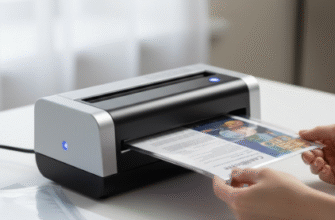
The 20th century saw further refinements. Telex machines allowed for direct typewritten communication over telegraph lines, creating a network primarily used by businesses for rapid text exchange. Later, the facsimile (fax) machine emerged, enabling the transmission of exact copies of documents over telephone lines. For decades, the screeching handshake of a fax machine was a familiar sound in offices worldwide, representing the fastest way to get a signed contract or a detailed diagram from one place to another short of physical delivery.
These technologies, while significant improvements, were still steps along the path rather than the final destination. They relied on specific hardware, dedicated lines, and operated point-to-point. They were faster, yes, but lacked the flexibility and ubiquity we now take for granted.
The Internet and Email: Communication at Light Speed
And then came the internet, and with it, electronic mail (email). This wasn’t just another step; it was a quantum leap, arguably as significant as the telegraph’s invention. Building on decades of computer networking research, email emerged as a way to send text-based messages between computers connected to a network.
Initially the preserve of academics and researchers, the explosion of the World Wide Web in the 1990s brought the internet and email into homes and businesses globally. The change was profound:
- Speed: Messages could traverse the globe in seconds, sometimes milliseconds. The physical distance became almost irrelevant.
- Cost: Compared to telegrams or long-distance calls, email was incredibly cheap, often bundled with internet access.
- Accessibility: Anyone with a computer and an internet connection could participate.
- Volume and Format: Email allowed for longer messages, attachments (documents, images), and easy forwarding and replying to multiple recipients.
Compared to the carrier pigeon, needing careful handling, fair weather, and days to deliver its tiny scroll, email was utterly transformative. A message typed in London could be read in Tokyo almost before the sender’s fingers left the keyboard. The delay was no longer measured in days or hours, but in the time it took for servers to route the data packets. This near-instantaneous communication flattened hierarchies, accelerated business processes, enabled global collaboration, and fundamentally changed how we maintain personal relationships across distances.
While email offers incredible speed, its perceived immediacy can create pressure for instant responses. This constant connectivity, a stark contrast to the waiting times of previous eras, can blur the lines between work and personal life. Managing expectations around response times is crucial in the age of instant digital communication.
The Ever-Accelerating Present
Email, once the pinnacle of speed, now shares the stage with instant messaging (IM), social media updates, and real-time video calls. Communication has become even faster, more fragmented, and more constant. We’ve moved from waiting days for a pigeon, to minutes for a telegram, to seconds for an email, to fractions of a second for a chat notification.
This incredible journey from the patient flight of a bird to the instantaneous flash of digital data underscores humanity’s relentless drive to connect faster and more efficiently. Each innovation, from trained pigeons to undersea cables to orbiting satellites, hasn’t just made communication quicker; it has reshaped societies, economies, and our very perception of time and distance. We live in an age of unparalleled communicative speed, a speed built on the foundations laid by countless innovations, stretching back to a time when the fastest news traveled on wings.